Official website of the NMDCA logo

DIY

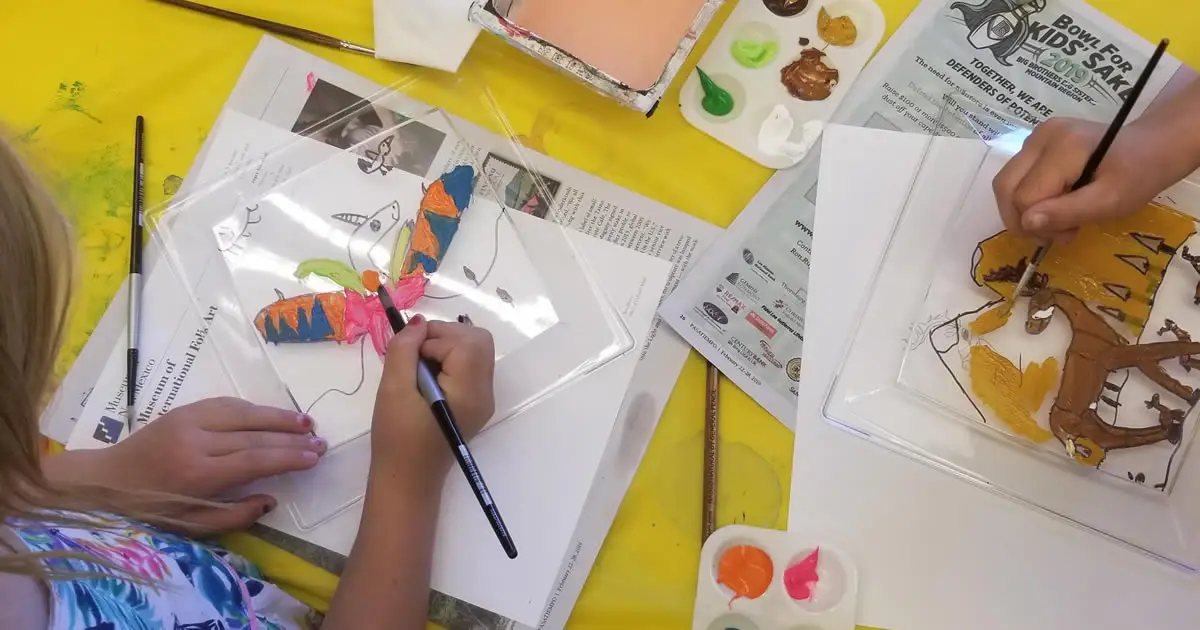
Kids painting on transparent plastic frames

Paper, Scissors, Glue...What will you make? We would love to see your creations! You can send us pictures and messages at kemely.gomez@state.nm.us

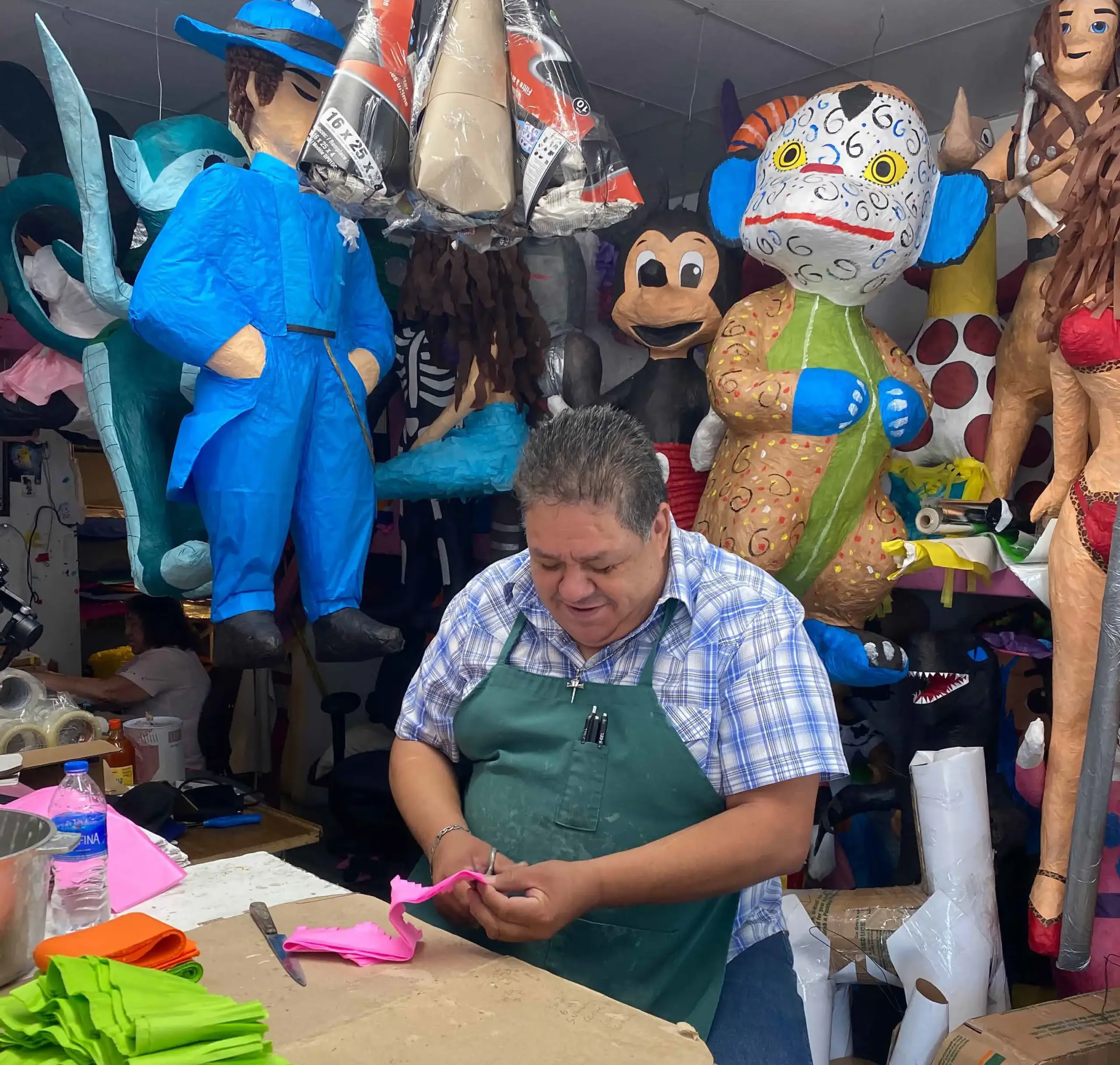
Man wearing a green apron cutting a piece of material to be used on a piñata

DIY Recycled Pinata

By far, piñatas are the best-known expression of cartonería outside of Mexico. Originally, they were only used for Christmas season celebrations. In Mexico, the season is generally known as Guadalupe-Reyes, beginning with the feast of the Virgin of Guadalupe on December 12th, and ending with Epiphany, or Three Kings’ Day, on January 6th.
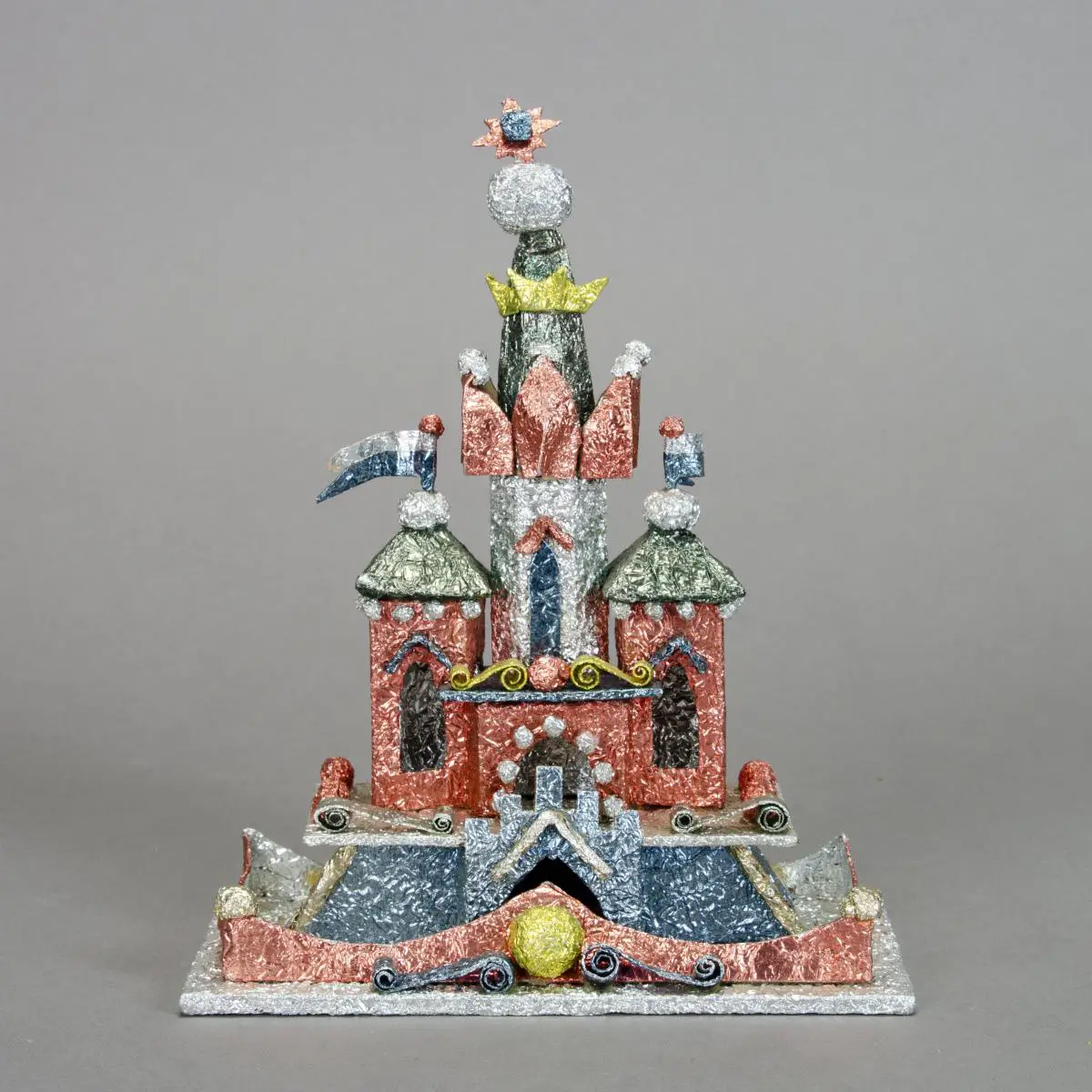
Metallic paper covering posterboard sculpture of a building with domed towers, spires, and crimped metallic tin details.

DIY Szopki

In Krakow, Poland during Christmas, carolers carry brightly decorated puppet theaters designed to emulate the shapes of stately churches and other impressive buildings through the city streets. These miniature puppet stages are called szopka or szopki (plural). The translation of szopka is Krakow crib, or manger scene, because nativity scenes are incorporated into the design.

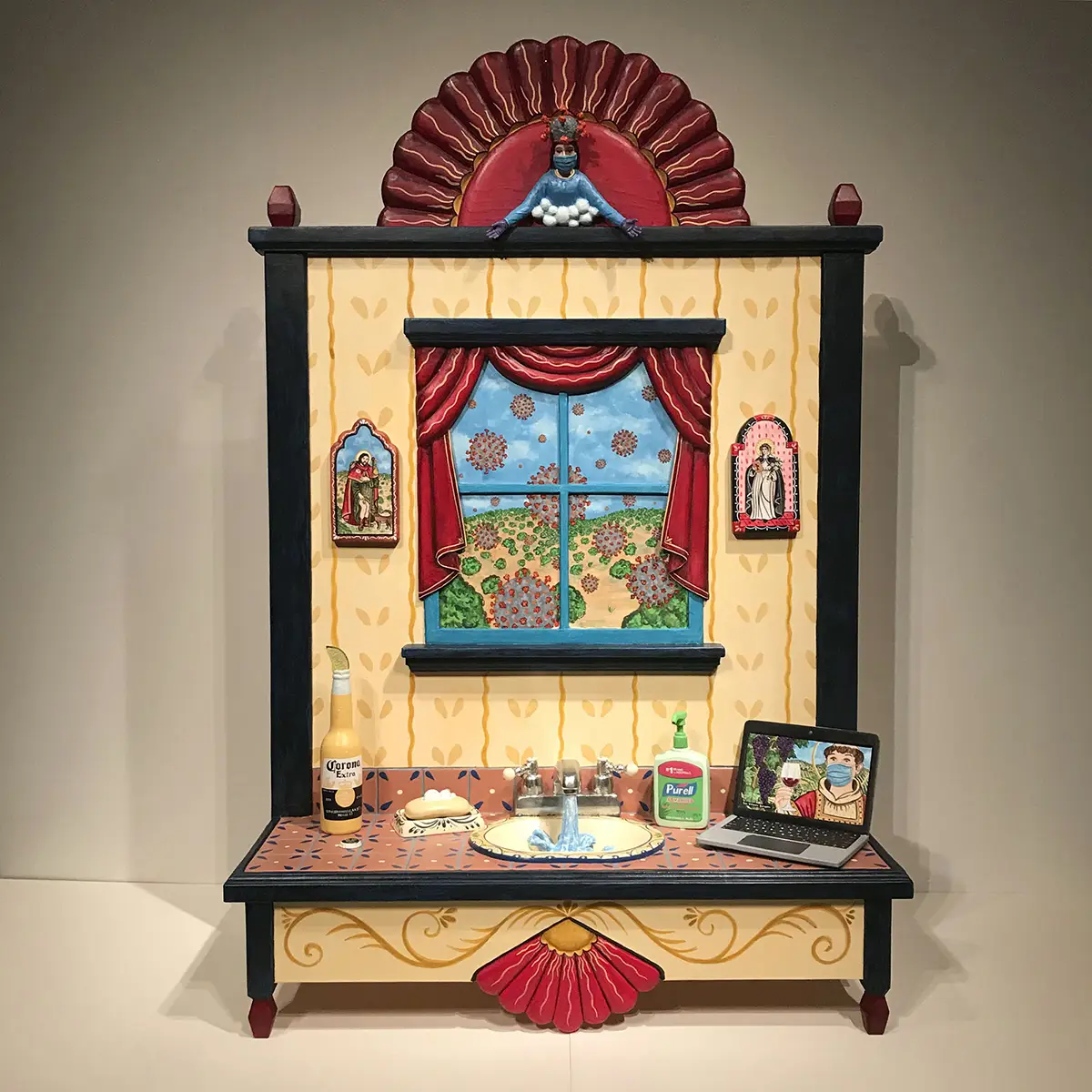
Painted wooden folk scene depicting life during COVID of a bathroom sink with Purell, a face-masked figure, virus imagery in the window, and saints.

DIY Ofrendas: Altar Vision 2020

During the annual celebration of Día de los Muertos (Day of the Dead) in Mexico an elaborate collection of ofrendas (offerings) are placed in a ritual altar display to welcome deceased loved ones in a colorful reunion with the living. Global events like COVID-19 inspired contemporary Santa Fe, New Mexico Santero, Arthur Lopez to respond and process artistically what was going on around him to visually tell a story of this moment in time by creating Altar Vision 2020.

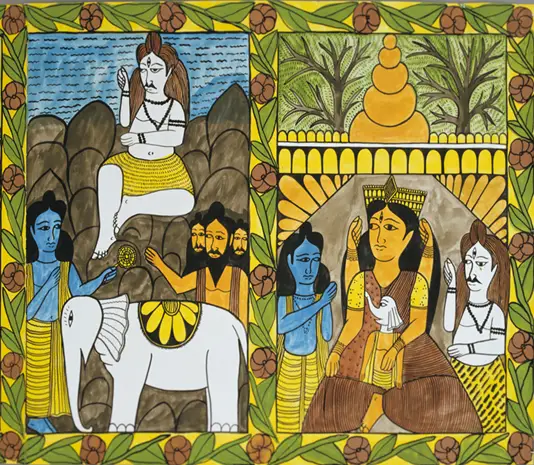
Folk painting with floral border showing two scenes: a deity seated on rocks above a white elephant, and a crowned figure flanked by attendants

DIY Narrative Scrolls from West Bengal

In West Bengal, India, a traditional caste community of artists, called patuas, paint colorful scrolls to accompany songs which they sing to relate historic, current, religious, and cultural events to their audiences. Many of the scrolls have a moral or lesson which relates to the story.

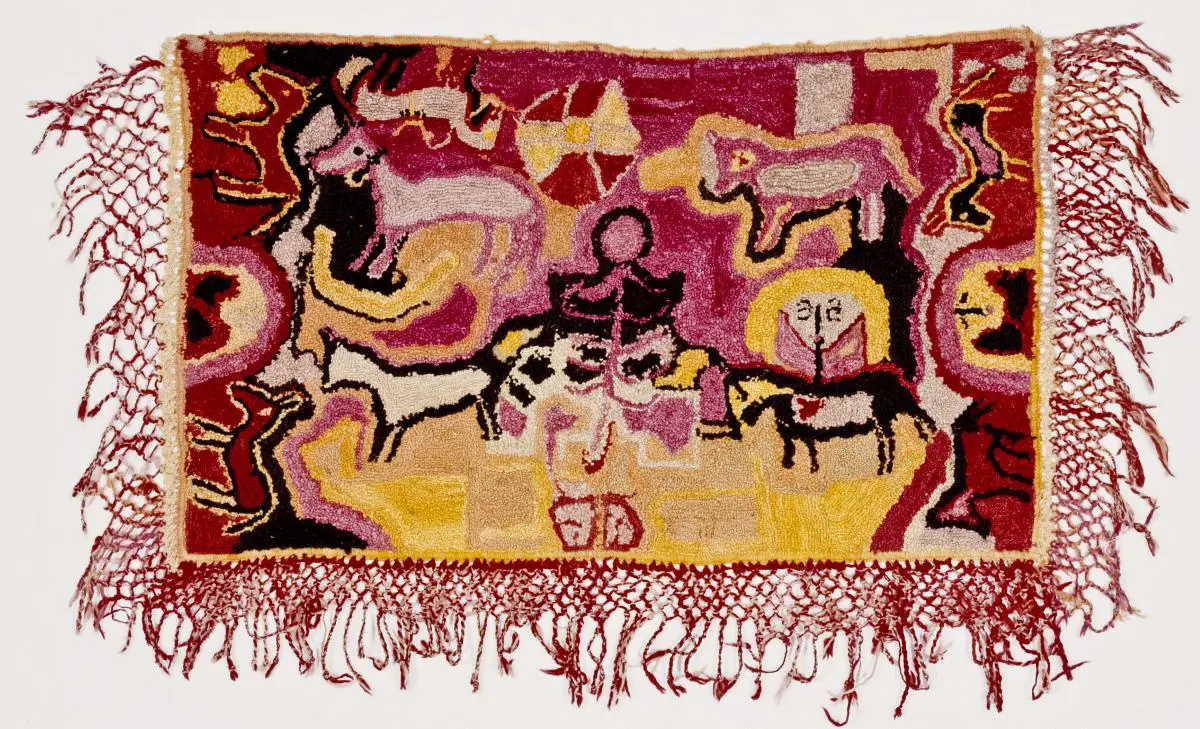
Wall hanging with animals and a figure in shades of pink, red, and yellow, bordered by netted red fringe.

DIY Woven Wall Hanging

“In and Out, In and Out” goes the thread weaving through the warp strings. This special thread, the weft, goes “Over and Under” to the end and back again for another line. Most fabric today is woven, but the majority of fabrics are woven by a machine. Some very special fabrics, blankets, and rugs are still woven by hand.

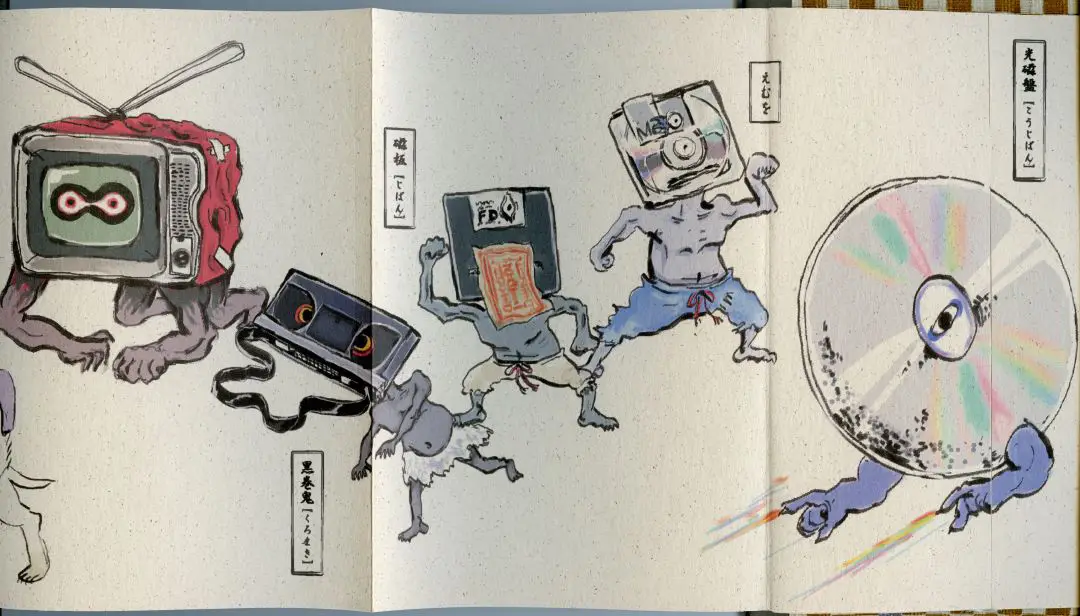
Illustrated accordion book pages showing yōkai-like creatures with electronics for heads: TV, cassette, floppy disk, camera, and CD, with Japanese labels.

DIY Japanese Accordion Book

Orihon are accordion-style books, composed of a continuous folded sheet of paper enclosed between two covers. In comparison to scrolls these accordion books were more practical and allow enough space for writing similar to a scroll, but in a compact form.

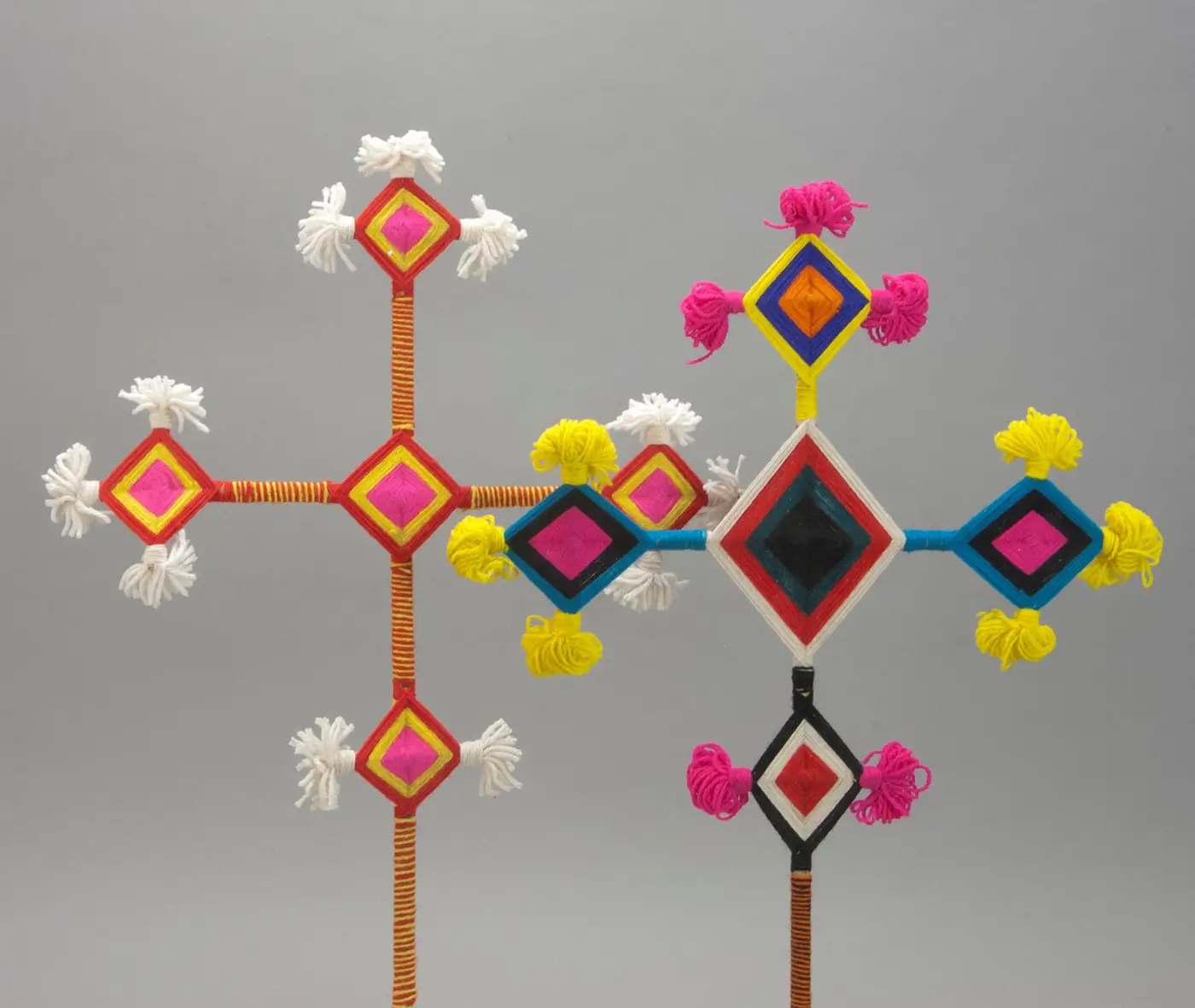
Two multi-diamond God's Eye (ojo de dios) sculptures with colorful yarn-wrapped sticks, tasseled ends, and layered concentric patterns.

DIY God’s Eye

Ojos de Dios (oh-ho-day-DEE-ohs), “god’s eyes,” are ritual objects made by the Huichol (wet-chol) indigenous people of Mexico. The Huichol symbolism of the god’s eyes is primarily associated with the prayers for their children – prayers for a good long life, protection and to ensure abundant crops.

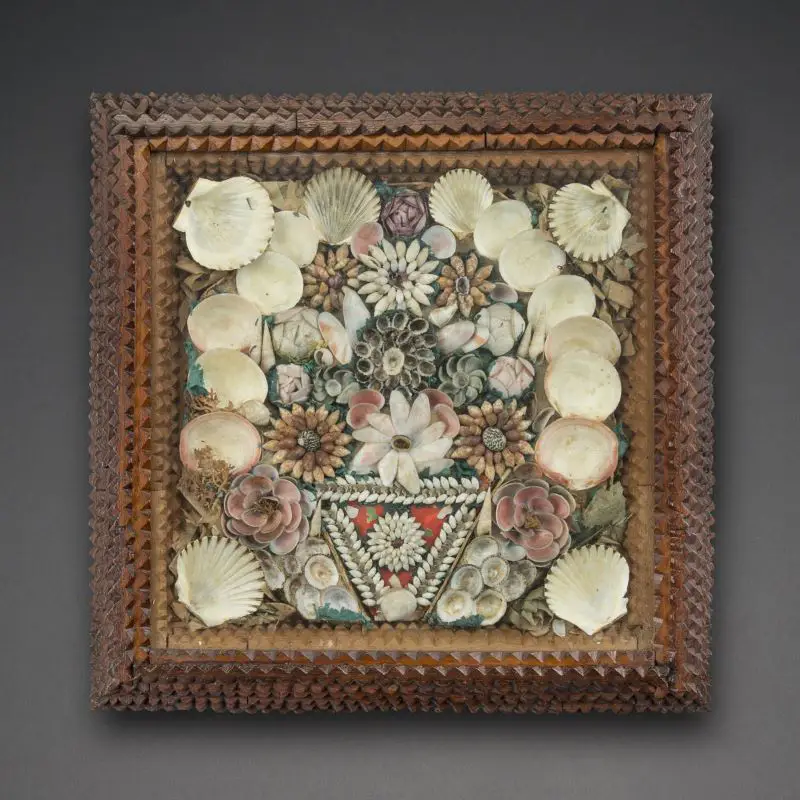
Framed folk sailor's valentine with shells arranged into flower and geometric patterns, set in a chip-carved wooden frame.

DIY Sailor’s Valentine

Sailor’s Valentines are intricate mosaics composed out of seashells of various colors, forms, and sizes. This unique art form appeared in the Caribbean during the late 18th and early 19th centuries with the arrival of trading sailing ships. It was believed that sailors were the makers of these seashell mosaics. However, recent research has attributed the art form to islanders from the West Indies (Caribbean).

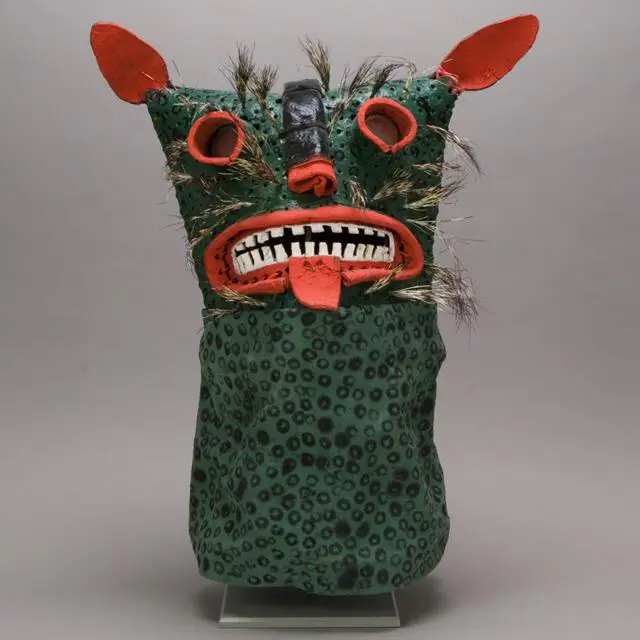
Green textured folk mask with pointed red ears, bared teeth, protruding tongue, bristled fur accents, and spotted fabric hood.

DIY Animal Masks

Cultures all over the world integrate masked processions with celebrations. Some celebrations mark seasonal changes, others religious occasions or historical events, still others, spontaneous revelry.

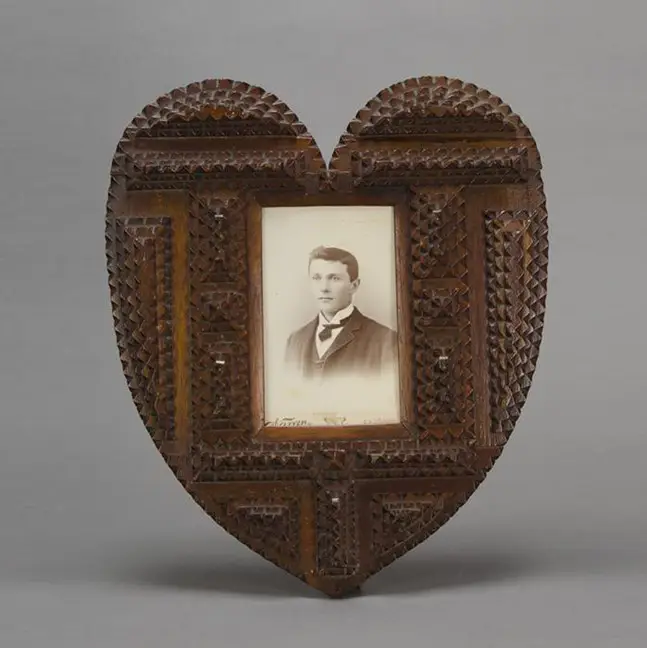
Heart-shaped tramp art picture frame with chip-carved wooden layers, holding a vintage sepia photograph of a young man.

DIY Tramp Art

A notch and a layer. Some wood and a knife. Patience and labor. These are the key ingredients of tramp art, a form of woodcarving that was common among working-class men (and occasionally women) primarily from the 1870s through the 1930s and 1940s in the United States and Europe.

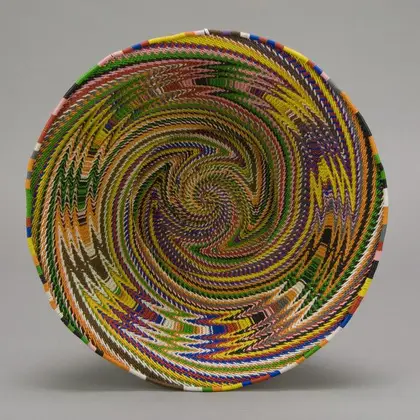
Woven telephone-wire basket with a colorful spiraling multicolor pattern, coiled into a round bowl shape.

DIY Paper Plate Weaving

Weaving is one of the oldest surviving crafts in the world. People learned to use plant and animal fibers to create useful and decorative objects such as clothing, carpets and baskets.

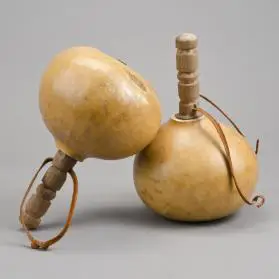
Two dried gourd rattles with carved wooden handles and looped leather cord, joined together to form a musical instrument.

DIY Maraca

Maracas, sometimes referred to as rhumba shakers, are percussive instruments made from dried calabash, gourd, or coconut shell.