

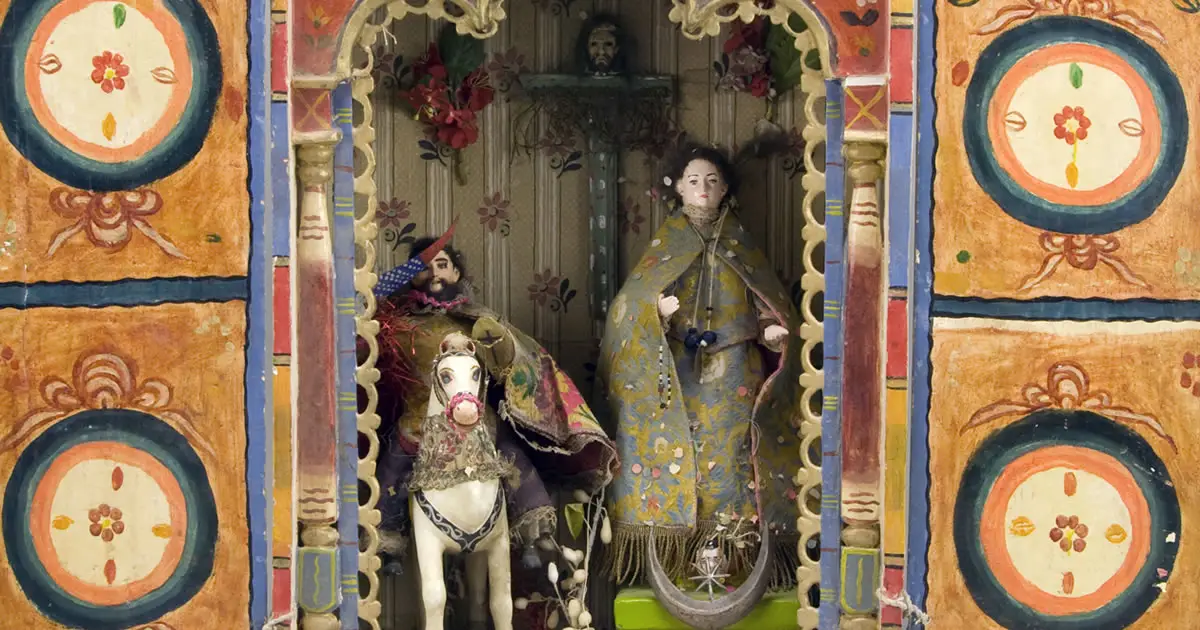
"Portable Altar with Santiago & Virgin Mary" Gift of Connie Thrasher Jaquith, Museum of International Folk Art, [A.2001.23.1]
There are many different ways to think about folk art. In fact, there is no one definition of folk art. In collecting and displaying folk art, the museum considers various concepts.
Generally, folk art is art that:
- May be decorative or utilitarian
- May be used every day or reserved for high ceremonies
- Is handmade; it may include handmade elements, as well as new, synthetic, or recycled components
- May be made for use within a community of practice or it may be produced for sale as a form of income and empowerment
- May be learned formally or informally; folk art may also be self-taught
- May include intangible forms of expressive culture like dance, song, poetry, and foodways
- Is traditional; it reflects shared cultural aesthetics and social issues. It is recognized that, as traditions are dynamic, traditional folk art may change over time and may include innovations in tradition.
- Is of, by, and for the people; all people, inclusive of class, status, culture, community, ethnicity, gender, and religion
Visit
Plan your visit to the Museum of International Folk Art
Learn
Teaching resources, research fellowships, and resources from our library and archives
About
Learn more about MOIFA and our mission
Explore
View our various exhibitions and collections
Support
Learn how you can support the museum and our efforts.